
Welsh Gold and the Royal Wedding Ring Tradition
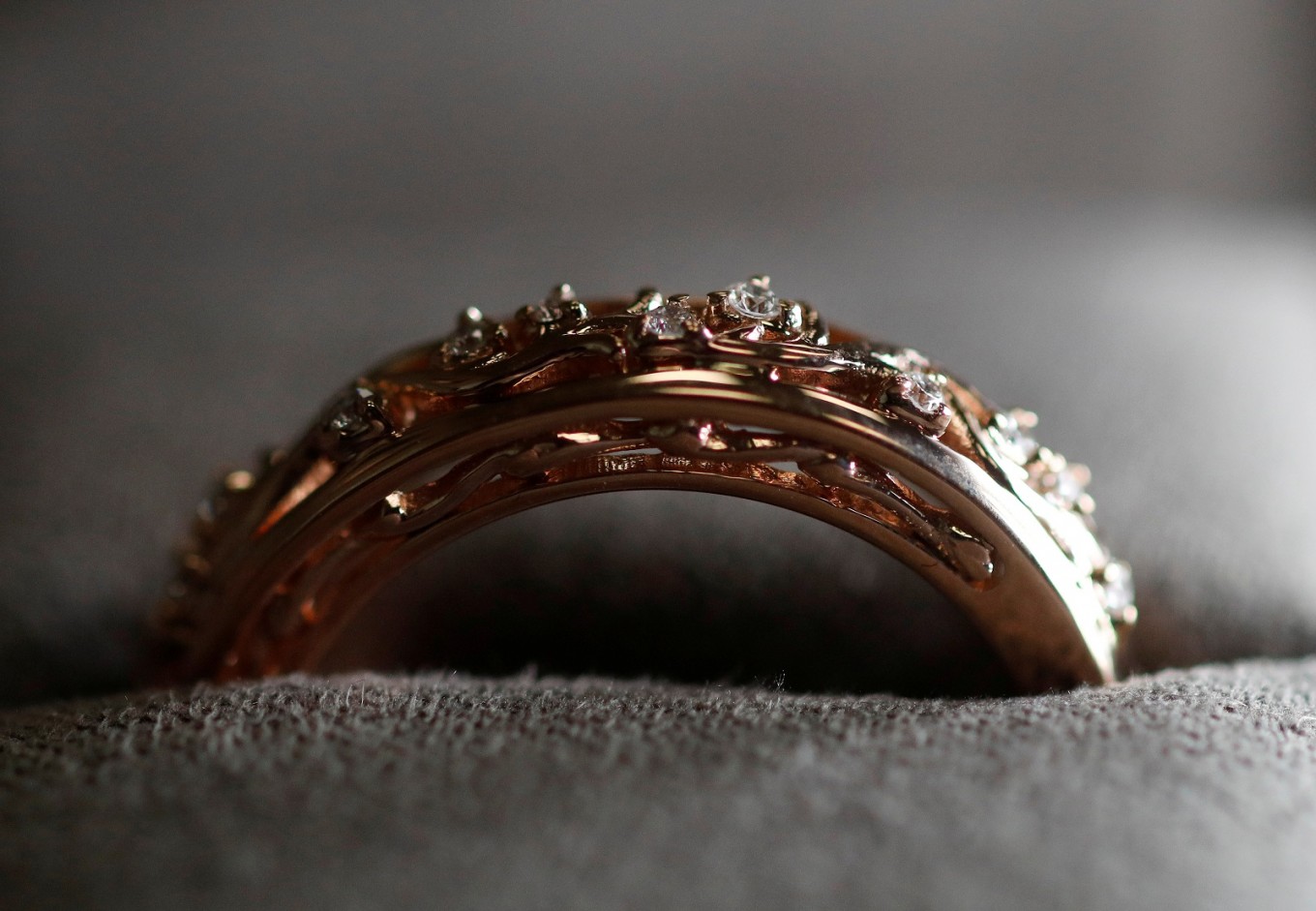
In 1923 the young woman later known as the Queen Mother was married with a wedding ring made from Welsh gold. Nothing about the choice was announced as the start of a custom, and no rule was written down anywhere. Nearly a century afterwards the same material had been used for royal wedding rings on nine separate occasions, which makes it one of the more durable habits in British public life. Clogau Outlet sits a long way downstream of that first ring, yet it sells genuine Clogau jewellery containing the same rare Welsh gold, a more literal connection to the story than most heritage claims can manage.
The tradition rewards being read in order. Each ring belongs to a different decade, a different level of public scrutiny and a different set of expectations about what a royal wedding was for. The metal stayed constant through all of it, and that constancy is the interesting part rather than any single ceremony.
What follows is the sequence, wedding by wedding, with a straight account of what the royal association actually claims. After that, why the tradition makes Welsh gold a sensible choice for your own wedding or anniversary jewellery, and how Clogau Outlet puts the material within reach through discontinued and past-season pieces at 30 to 50 per cent off RRP.
1923 and 1947: Two Rings and a Precedent
The 1923 ring imposed no obligation on anyone. It was a Welsh material chosen for a royal bride at a moment when the Clogau St David’s mine at Bontddu, near Barmouth in Gwynedd, had already passed its productive years. Between 1862 and 1911 that mine had been Britain’s largest and richest gold source, yielding nearly 2.5 tonnes before the best seams thinned out, and it closed for the last time in 1998.
Twenty-four years after the first ring the choice was repeated. The 1947 marriage of the future Queen Elizabeth II used Welsh gold again, and repetition is what converts a decision into a tradition. Two rings from the same source, a generation apart, within the same family, established a pattern nobody needed to formalise.
A Shared Source: The Detail That Made It Stick
Reports have long held that a single nugget supplied the gold for these rings and for several that came after. Whether the accounting was ever quite that tidy is impossible to verify from outside, but the idea carried real weight. It meant each new ring was understood to be materially connected to the ones before it rather than merely similar in appearance, and material connection is a far stronger form of continuity than resemblance.
1960 and 1973: A Custom Left Undisturbed
Princess Margaret married in 1960 and Princess Anne in 1973, and in both cases Welsh gold was used again. These are the quiet entries in the sequence. Neither wedding produced the global audience of the ones that followed, and neither was framed at the time as an exercise in preserving heritage.
That is precisely why they matter. Traditions survive not through the celebrated moments but through the unremarkable ones, when nobody would have noticed a change of course. Two more rings, thirteen years apart, made the practice ordinary within the family rather than ceremonial.
By this point the pattern had run across fifty years and four brides. Anyone looking at it in 1973 would have seen something with the settled feel of a house custom, maintained by habit and family memory rather than by any instruction.
1981 and 1986: The Tradition Under Full Attention
The 1981 wedding of Prince Charles and Princess Diana was watched by an audience larger than any that had come before, and the 1986 marriage of Sarah, Duchess of York, followed five years later with a comparable level of coverage. Welsh gold featured in both. The custom that had grown up quietly was now being observed by a very large number of people at once.
Wider awareness produced a practical difficulty. Welsh gold has historically commanded many times the price of standard gold, and public interest did nothing to soften that. Wanting the material and being able to afford it were, for most people, two separate matters, which is part of why buying discontinued Clogau pieces has become such a sensible route for anyone who wants the same gold without paying current retail.
2005 to 2018: Camilla, Catherine and Meghan
The most recent three rings run from the 2005 marriage of the then Prince of Wales and Camilla, through the 2011 wedding of Prince William and Catherine, to the 2018 wedding of Prince Harry and Meghan. Across that span the family changed considerably in composition, in public role and in the way it presented itself. The wedding rings did not.
Clogau’s own designs draw openly on this lineage, and the pieces gathered in the Welsh Royalty collection are the most direct expression of it. Nothing there pretends to be a royal ring. The point is the shared material and the shared associations, which is the honest version of the claim and also the more interesting one.
Nine Weddings, One Material
Set out end to end, the list covers 1923, 1947, 1960, 1973, 1981, 1986, 2005, 2011 and 2018. Ninety-five years, several reigns, and a country that changed almost beyond recognition in the interval. Very few customs of any kind have that record, and fewer still have kept it without a rule requiring them to.
Why the Supply Cannot Be Renewed
The scarcity behind all this is real rather than manufactured. There is no commercial Welsh gold mining in Wales today, so the quantity in circulation is the quantity that will ever exist. Every piece made from it draws on a stock that cannot be added to.
That fact governs everything about how Welsh gold is used. It is worked into pieces alongside other gold rather than forming them entirely, which is what allows a finite supply to run through the whole outlet jewellery catalogue rather than a handful of items. Clogau’s standard description refers to rare Welsh gold as used by some members of the British Royal Family for over 100 years, and that phrasing is careful for good reason.
What the Royal Association Actually Means
Clarity here is worth more than enthusiasm. The claim is about the material and nothing beyond it. Welsh gold has been used in royal wedding rings across a long stretch of the twentieth and twenty-first centuries, and Welsh gold from the same tradition is used in Clogau jewellery.
What the claim is not is an endorsement. There is no Royal Warrant involved, no appointment as an official jeweller, and no suggestion that any living member of the family recommends a product. Anyone who tells you otherwise is overselling something that does not need it, because the material fact is remarkable on its own terms.
Welsh gold also appeared beyond weddings. The regalia made for Prince Edward’s investiture as Prince of Wales in 1911 incorporated it, which places the association a good decade before the first of the wedding rings and shows it was never purely a marital custom.
Choosing Welsh Gold for Your Own Wedding or Anniversary
A wedding ring is worn more consistently than any other object most people own, put on once and rarely taken off for decades. Choosing a material with a hundred-year record of being used for exactly that purpose is a reasonable piece of reasoning, not sentimentality.
Clogau Outlet does not currently carry a wedding ring range, so the sensible approach is to look at what it does have. The discounted Clogau rings in stock cover dress rings and stone-set designs that work well as anniversary pieces or as a companion to a band bought elsewhere, and buying one at outlet prices leaves room in the budget for the ring that matters most.
Anniversaries suit this material particularly well. A stone-set piece from the reduced diamond jewellery range marks a specific year without repeating the wedding ring itself, and pieces bought at 30 to 50 per cent below RRP allow the tradition to be observed more than once across a long marriage.
How Clogau Outlet Makes the Material Reachable
Everything at Clogau Outlet is genuine Clogau jewellery that has been discontinued, held over from a past season or run to the end of its line. The material is identical, the finishing is identical, and the Welsh dragon stamp and Clogau stamps are present exactly as they are on current stock. What has changed is the price.
The current outlet sale range is where the reductions are steepest, and it moves as stock clears rather than staying fixed. For a wedding or anniversary gift that is not a ring, the Welsh gold necklaces available are usually the easiest place to start, since a pendant avoids the sizing question entirely and suits a wider range of tastes than most other categories.
Buying discontinued has one further advantage worth naming. A piece no longer in production will not be seen on three other people at the same event, which for jewellery attached to an occasion is a genuine benefit rather than a compromise.
Conclusion: A Hundred Years of Not Making a Fuss
The most striking thing about the royal Welsh gold tradition is how little effort went into maintaining it. Nine weddings across ninety-five years, no decree, no announcement, no institutional machinery, just a material chosen again each time because it had been chosen before. Customs that survive that way tend to be the ones people actually believe in.
Owning Welsh gold puts you in contact with the same finite supply, and nothing more grandiose than that. The gold in a discounted pendant came from the same Welsh ground and carries the same scarcity, which is a sufficient reason to want it. Clogau Outlet simply removes the assumption that the material belongs only to people who can pay full retail for it.
If a wedding or an anniversary is what brings you to Welsh gold, the tradition offers a useful lesson in restraint. The rings that anchor this story were never showy. They were plain bands made from a scarce Welsh metal, worn for decades, and their significance came entirely from continuity rather than display.


